How to Choose the Best Solar Flood Light in Kenya

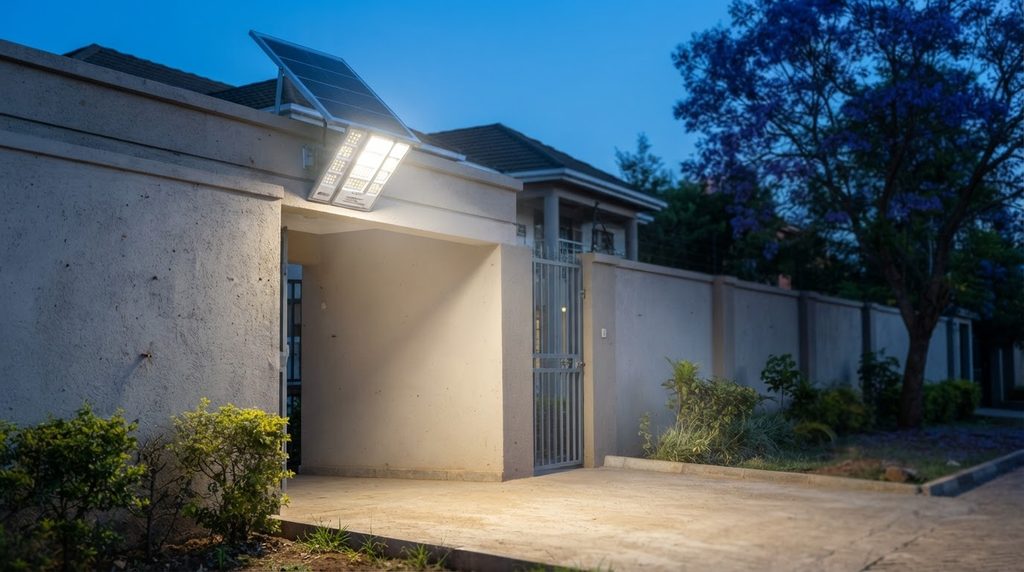
Solar flood light Kenya illuminating a residential compoundWhen you start looking for a solar flood light in Kenya, it is easy to assume that the model with the highest wattage must be the best choice. You see 100W, 200W, 300W, 400W and 500W options and naturally wonder which one will give you enough brightness for your compound, gate, business or outdoor space.
But choosing the right solar flood light is not simply about buying the biggest number on the box. Battery capacity, solar panel output, light coverage, installation position, weather protection and the size of the area you want to illuminate all matter.
The best solar flood light for a small residential entrance may be very different from the right option for a large compound, farm, parking area or commercial property. In this guide, we will look at the important factors to consider before buying a solar flood light in Kenya and how to match the product to your actual lighting needs.
Start with the space you want to illuminate
Imagine two customers.
The first wants to light a small gate and the walkway leading to the house. The second wants to illuminate a large compound containing a parking area, several buildings and a long perimeter wall.
It would make little sense to recommend exactly the same solar flood light to both.
The first customer may be perfectly served by a smaller floodlight positioned correctly. The second may need a higher-output model—or several lights positioned at different points.
So before asking, “How many watts do I need?”, ask a better question:
“What exactly am I trying to light?”
That one question changes the buying decision.
What does 100W, 200W or 500W actually mean?
Wattage tells you about electrical power, but it should not be treated as a complete measurement of brightness.
When comparing solar flood lights, you should also consider the actual light output, battery capacity, solar panel, lighting mode, beam distribution and installation position.
This is particularly important when comparing products from different manufacturers. Two products carrying the same wattage label may not necessarily deliver the same overall experience.
Think of wattage as one piece of the puzzle rather than the entire picture.
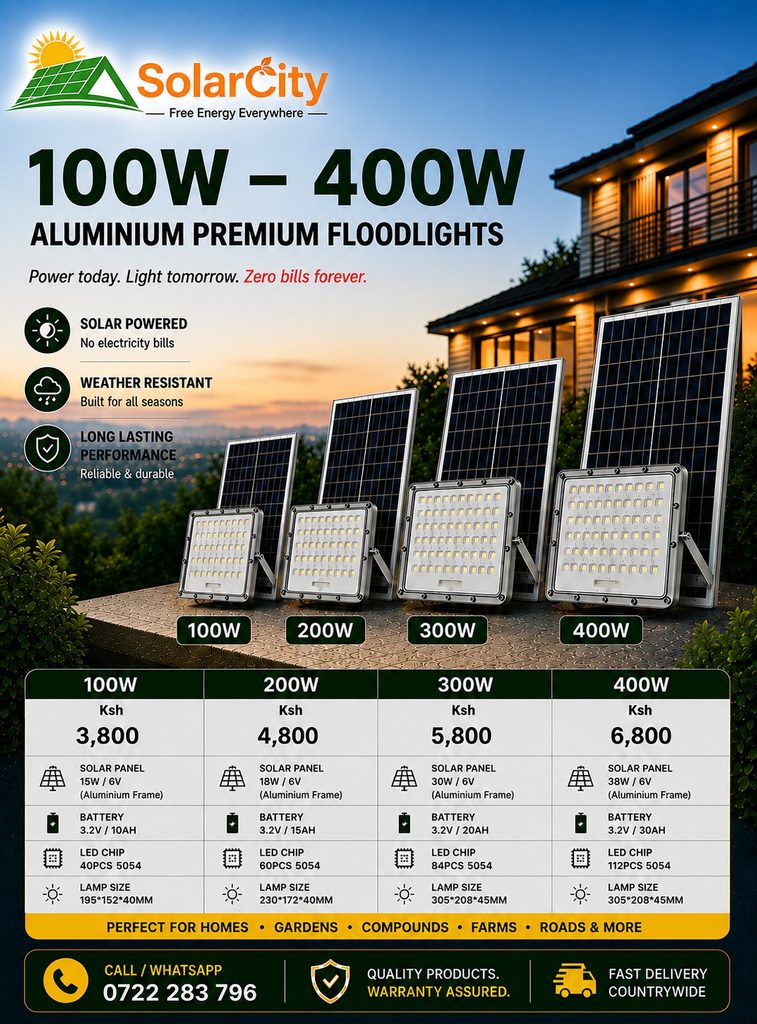
Solar flood light wattage comparison from 100W to 400WWhen does a 100W solar flood light make sense?
A smaller floodlight can be a sensible choice when the area is relatively compact.
You might be lighting a residential entrance, a small gate, a pathway, a shop frontage or a particular security point.
SolarCity currently lists its 100W Solar Flood Light at KSh 3,800.
The important thing is not to look at the price in isolation. Ask whether the model’s output and design suit the area you want to illuminate.
A small, well-positioned light can sometimes be more useful than a much larger light mounted in the wrong place.
What about a 200W solar flood light?
A 200W model becomes interesting when the lighting requirement is broader.
Perhaps the gate is larger. Perhaps there is a parking area that needs more coverage. Perhaps you want to illuminate the front of a shop, farmhouse or commercial building.
SolarCity currently lists its 200W model with a 15Ah battery at KSh 4,800.
Again, the number itself should not make the decision for you. Look at the complete product and think about where the light will actually go.
When should you consider 300W or 400W?
Larger properties naturally create larger lighting challenges.
A 300W or 400W solar flood light may make more sense when you are dealing with a wider compound, commercial premises, a farm, parking area or several outdoor spaces.
SolarCity currently lists the 300W model at KSh 5,800 and the 400W model at KSh 6,800.
But there is an important point here: increasing wattage does not automatically solve every lighting problem.
If you have three dark corners around a property, one extremely powerful light in the middle may still leave two of those corners poorly illuminated.
Sometimes the better solution is better positioning rather than simply more power.
And then there is the 500W option
The 500W Solar Flood Light 2-Pack is particularly interesting for customers who need lighting at more than one location.
SolarCity currently lists the two-pack at KSh 6,999. Each unit is specified on the current product page as an FT N-L with a 35Ah, 3.2V battery, a 6V/12W polycrystalline solar panel, IP68 protection and dusk-to-dawn operation.
Because it is a two-unit package, it should not be compared directly with the price of a single floodlight.
The configuration can be useful for situations such as lighting both sides of a gate, two corners of a compound or separate areas of a larger property.
The battery matters more than many buyers realise
A solar flood light spends the day collecting energy and the night using it.
That makes the battery a crucial part of the system.
Battery capacity is commonly expressed in amp-hours, or Ah. To estimate stored energy, you can use:
Watt-hours = Amp-hours × Voltage
So a 15Ah battery at 3.2V represents approximately 48Wh of stored energy.
That does not mean the light will automatically run for a specific number of hours. Actual runtime depends on the load, operating mode, battery condition, system efficiency and charging conditions.
This is why promises such as “runs all night” should always be understood in context.
The solar panel is equally important
The battery stores energy, but the panel has to collect it.
If the solar panel spends much of the day in the shade of a tree, roof or building, charging performance can be affected.
A good installation therefore considers the panel location from the beginning.
The panel should have a clear opportunity to receive sunlight, while the light itself should be positioned to illuminate the area that matters.
Those two directions do not always have to be identical.
So which SolarCity model should you choose?
There is no universal answer.
For a small entrance, a 100W or 200W option may be worth considering.
For a larger outdoor area, you may want to look at the 300W or 400W models.
For customers who want two lighting points, the 500W two-pack may be worth considering.
The important thing is to match the product to the property rather than choosing the largest wattage simply because it sounds more powerful.
A simple way to make the decision
Before buying, stand outside the property at night.
Look at the areas that actually need illumination.
Where do people walk?
Where do vehicles enter?
Which corners are dark?
Where is security most important?
Once you answer those questions, choosing the right solar flood light becomes much easier.
What about the SolarCity 3-in-1 option?
There is another approach if your lighting requirement involves several directions.
SolarCity currently lists a 3-in-1 Solar Street Light 200W at KSh 5,800. Rather than thinking only in terms of one conventional floodlight, this type of configuration can be considered when you want lighting distributed across more than one point.
The exact suitability depends on the property layout and the verified specifications of the current model.
Frequently Asked Questions
What is the best solar flood light in Kenya?
There is no single best model for every property. The right choice depends on the area, mounting position, required brightness, battery, panel and intended use.
Is a 500W solar light always better than a 200W light?
Not necessarily. Wattage is only one specification. The complete system and the way it is installed matter.
How many watts do I need for a compound?
That depends on the size and layout of the compound, how much area needs illumination and whether you plan to use one or several lighting points.
Are solar flood lights good during power cuts?
Standalone solar floodlights can continue operating without grid power, provided they have sufficient stored energy.
Should I buy one large light or several smaller ones?
For some properties, several strategically positioned lights provide better coverage than one very powerful fixture.
Need help choosing? Send SolarCity a photo of the area you want to illuminate and ask which model would best suit the space.
Related Products
-
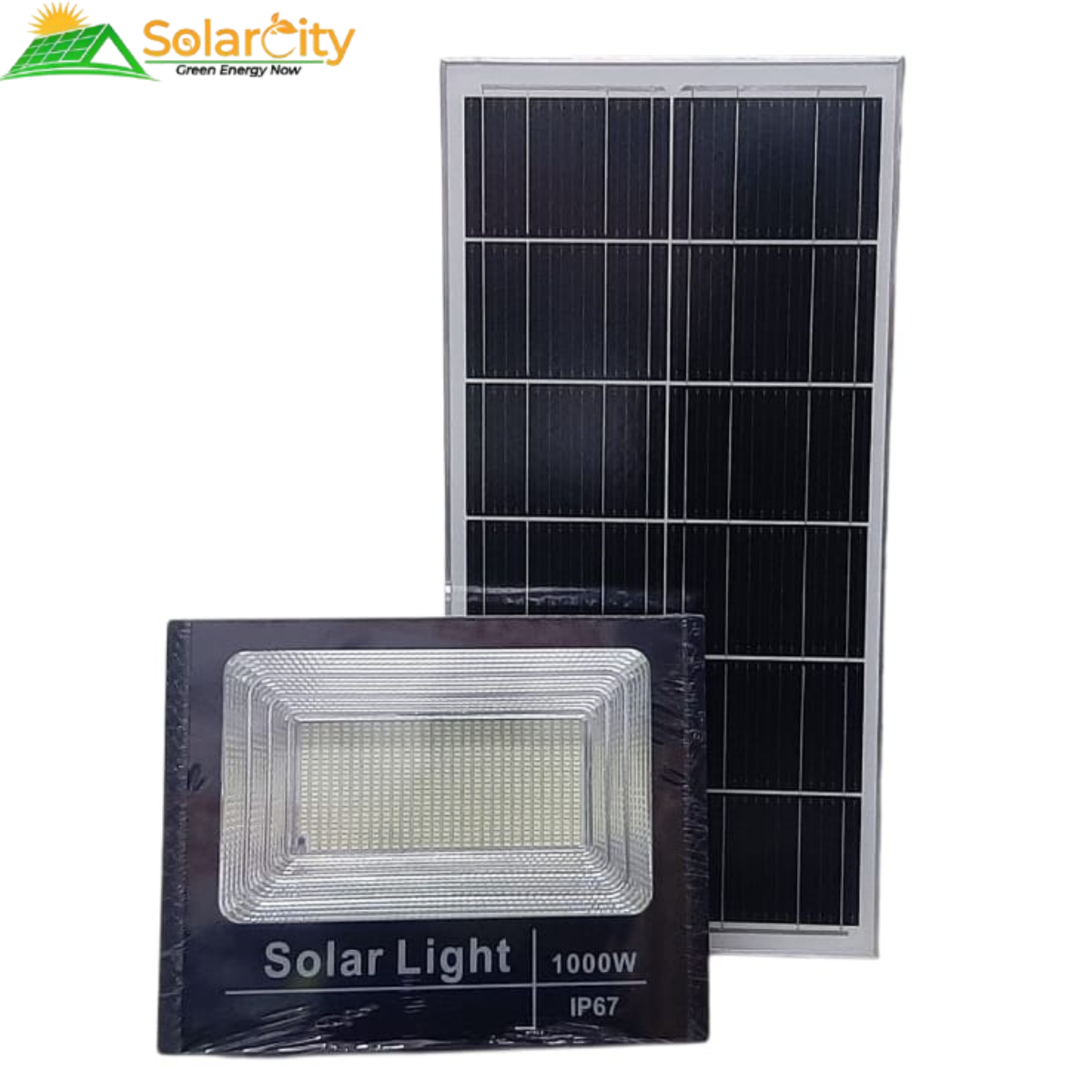
1000W Solar Flood Light – 40Ah Battery, 45W Panel, IP67
Original price was: KSh 9,500.00.KSh 8,999.00Current price is: KSh 8,999.00. -
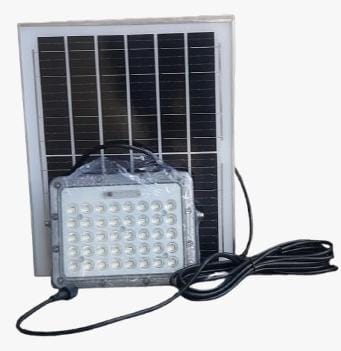
100W Solar Flood Light | SolarCity Kenya
Original price was: KSh 4,500.00.KSh 3,800.00Current price is: KSh 3,800.00. -
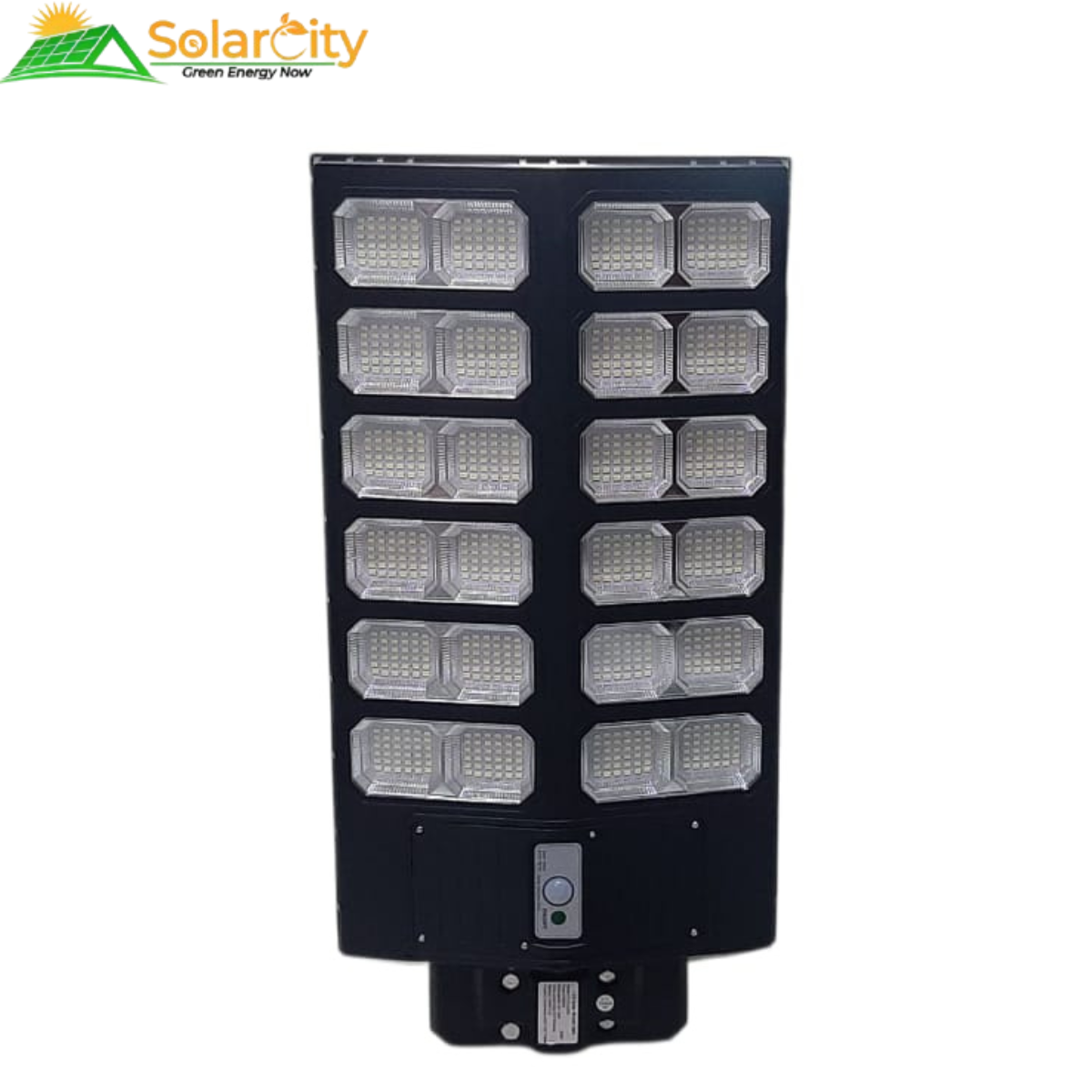
2000W Solar Street Light | SolarCity Kenya
Original price was: KSh 9,000.00.KSh 7,999.00Current price is: KSh 7,999.00. -
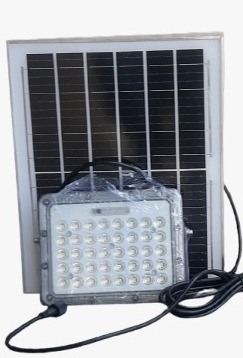
200W Solar Flood Light | SolarCity Kenya
Original price was: KSh 5,000.00.KSh 4,800.00Current price is: KSh 4,800.00.